
Yes! But ceiling fans don’t actually lower the temperature of a room. They can make people feel cooler by creating a wind-chill effect on the skin. They can be used alongside your air conditioner to help improve comfort and reduce the workload placed on your HVAC throughout the summer.
Our team at Shafer helps homeowners maximize their comfort and efficiency. Here’s why a properly installed ceiling fan is one of the easiest upgrades you can make.
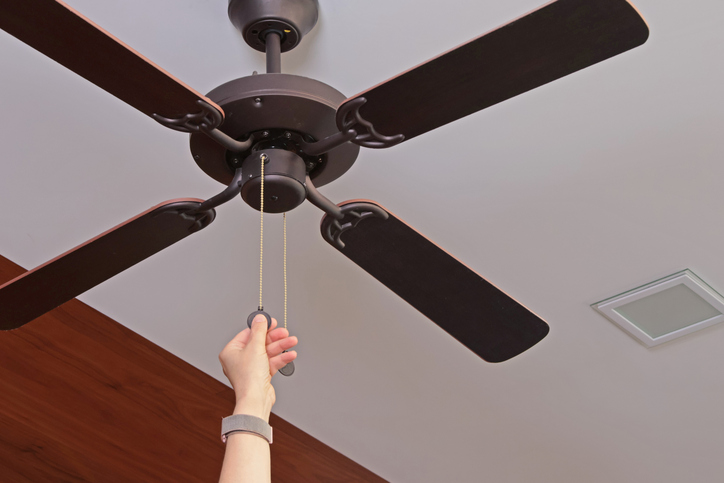
How Ceiling Fans Help Reduce Cooling Costs
Circulating air also helps people feel cooler, making it possible to raise the thermostat a few degrees while maintaining the same level of comfort. That small change may not sound like much, but it can reduce the amount of time your air conditioner runs during Ohio’s hottest summer months. Ceiling fans can help:
- Improve comfort in occupied rooms
- Reduce strain on your AC system
- Improve airflow distribution
- Minimize hot and cold spots
- Lower cooling costs when used properly
If nobody is in the room, turn the fan off to avoid wasting electricity.
Make Sure Your Fan Is Spinning the Right Direction
One of the most common mistakes homeowners make is running their ceiling fan backward during summer. When it’s hot out, your ceiling fans should rotate counterclockwise when viewed from below. This direction pushes air downward and creates the cooling breeze that helps occupants feel more comfortable. A fan spinning clockwise during summer leaves the room feeling stuffy even though the fan is running. Most ceiling fans have a small switch located on the motor housing so you can change rotation direction seasonally.
Signs Your Ceiling Fan May Be Wired Incorrectly
It’s easy to assume a ceiling fan is working correctly if the blades are spinning. But wiring issues could create safety concerns and reduce its cooling performance. Some warning signs include:
- Fan speeds not operating correctly
- Lights flickering when the fan runs
- Humming or buzzing noises
- Fan wobbling excessively
- Wall switches behaving inconsistently
- Breakers tripping when the fan is turned on
Improper wiring also places unnecessary stress and wear on the fan motor and potentially shorten its lifespan.
What Many Homeowners Overlook About Ceiling Fans
Ceiling fans improve the comfort in rooms with high ceilings where cool air naturally settles lower in the space. The extra air circulation is especially helpful in living rooms, vaulted living areas, and open-concept floor plans. Without proper air circulation, temperature differences can develop between floor level and the upper portions of the room.
Why Professional Installation Matters
Installing a ceiling fan isn’t necessarily a DIY job and is more complicated than mounting blades and connecting wires. A ceiling fan also needs good support, electrical connections, balancing, and placement. That’s why our team focuses on:
- Safe electrical connections
- Proper ceiling support
- Reduced wobbling and vibration
- Maximum airflow performance
- Reliable operation for years to come
We give you the peace of mind that your ceiling fan is operating quietly, efficiently, and safely throughout the cooling season.
Improve Summer Comfort with a Ceiling Fan
Whether you’re replacing an outdated fan or adding one to a room that never seems comfortable, the right installation can improve airflow, reduce strain on your AC system, and make your home feel cooler all summer long.
Contact Shafer Heating & Cooling, LLC today to learn more about ceiling fan installation and other solutions that help keep your Hillsboro home comfortable all summer long.